 Skip to content
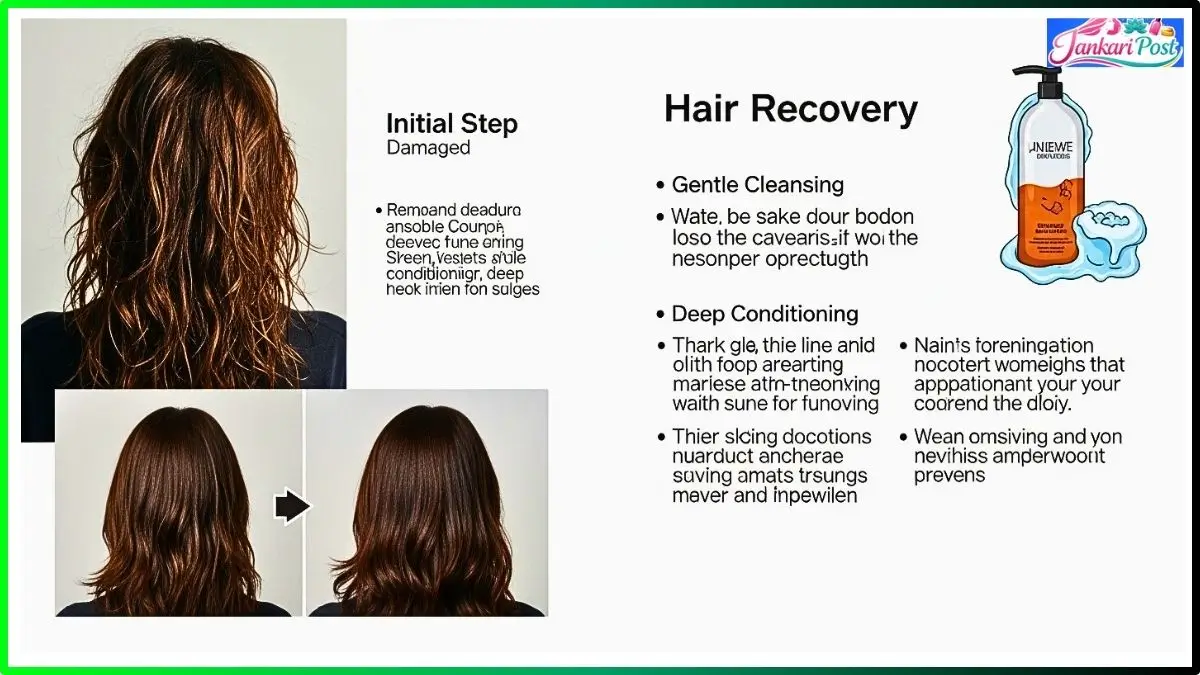
Chemical treatments like straightening or perming can dramatically change how your hair looks, but they can also cause serious structural damage if not managed properly. Many people experience dryness, breakage, and dullness after such treatments, especially when heat styling or improper care continues afterward.
If your hair feels brittle, snaps easily, or no longer responds to regular oiling or conditioning, it is a clear sign that your hair needs a targeted recovery routine. Surface-level fixes are not enough when the damage affects the inner structure of the hair strand.
Also Read

In this guide, you will learn a simple, step-by-step approach to help repair and strengthen chemically treated hair. From the right care routine to common mistakes to avoid, these practical tips will help you restore healthier, more manageable hair over time.
Overview Table
| Once every 7 to 10 days, never more often, or you risk protein overload | Details |
|---|---|
| Primary cause of damage | Chemical treatments break down disulfide bonds in hair, weakening the entire structure permanently |
| Most critical recovery step | Protein treatments to rebuild broken keratin bonds inside each strand |
| Second most critical step | Deep moisture treatments to restore flexibility and prevent further breakage |
| Recovery timeline for mild damage | 21 to 30 days with consistent protein and moisture balance |
| Recovery timeline for severe damage | 60 to 90 days, may require regular trims to remove unsalvageable ends |
| Average cost of recovery routine | ₹1200 to ₹2000 for one month of products including shampoo, treatments, and serums |
| Frequency of protein treatments | Once every 7 to 10 days, never more often or you risk protein overload |
| Frequency of moisture treatments | Twice a week minimum to maintain flexibility and prevent dryness |
| Must avoid completely during recovery | All heat styling tools, chemical color, and tight hairstyles that stress already weak hair |
Main Problem
Chemical straightening and perming do not just style your hair — they fundamentally change its internal structure by breaking and reforming the protein bonds that hold each strand together.
Once those bonds are broken, your hair loses its natural strength, elasticity, and moisture-holding capacity. What you are left with is hair that looks smooth for a few weeks but becomes progressively weaker, drier, and more prone to breakage over time.
Most people treat chemically damaged hair the same way they treat regular dry hair. They apply more oil, use heavy conditioners, and hope the dryness will go away. But the problem is not surface dryness — it is internal structural collapse.
The hair shaft has holes and gaps where protein bonds used to be, and no amount of external moisture can fill those gaps. The hair becomes porous, loses moisture as fast as you add it, and continues breaking until you address the underlying protein loss.
Why does it happen?

Chemical straightening and perming solutions work by breaking the disulfide bonds that give hair its natural shape and strength. The chemical solution is applied, the bonds break, the hair is reshaped, and then a neutralizer is applied to reform the bonds in the new shape. But this process is never perfect. Some bonds never reform properly, some areas are over-processed, and the hair cuticle gets damaged in the process.
I learned this in early 2026 when a trichologist examined my hair under a microscope and showed me the actual damage. My hair strands looked like frayed rope with chunks missing along the shaft.
She explained that the straightening treatment had stripped away protective layers and broken too many internal bonds, leaving my hair structurally compromised and unable to hold moisture or withstand any additional stress.
How did I fix it?
I stopped all heat styling immediately and put away my straightener, curling iron, and blow dryer for two full months. I started using a protein treatment once a week to rebuild the broken bonds, followed immediately by a deep moisturizing mask to restore flexibility.
I also switched to a sulfate-free shampoo that did not strip my hair further, and I started applying a bond-repair serum after every wash. Within three weeks, my hair stopped snapping when I combed it, and the texture improved enough that I could actually run my fingers through it without getting stuck in tangles.
Step-by-Step Guide
This is the exact recovery routine I followed to repair my chemically damaged hair. Each step includes real products, costs, and correct application methods.
Step 1: Switch to a Gentle Sulfate-Free Shampoo

Damaged hair cannot handle harsh sulfates that strip away what little moisture it has left. I switched to L’Oreal Paris EverPure Sulfate-Free Color Care Shampoo, which costs ₹675 for a 250ml bottle. This shampoo cleanses gently without further damaging already compromised hair.
Wash your hair only three times a week, maximum. Wet your hair thoroughly with lukewarm water, apply a small amount of shampoo to your scalp, and massage gently for one minute. Rinse completely with cool water. Never scrub or rub your hair aggressively because damaged hair tangles and breaks easily when wet.
Step 2: Apply Bond-Repair Treatment Before Every Wash
Once a week before shampooing, I apply a bond-repair treatment that specifically targets broken disulfide bonds. I use Matrix Bond Ultim8 Intensive Pre-Shampoo Treatment, which costs ₹1050 for a 200ml bottle. This product contains maleic acid and other bond-building ingredients that penetrate the hair shaft and reconnect broken protein bonds.
Apply the treatment to dry hair before getting in the shower. Work it through from roots to ends, focusing extra product on the most damaged areas. Leave it on for 15 minutes, then shampoo as usual. This step made the single biggest difference in my hair’s recovery. Always do a patch test before using any bond-repair treatment to check for scalp sensitivity.
Step 3: Use a Protein Treatment Once Every Seven Days
After shampooing, apply a protein treatment to rebuild the keratin structure inside each strand. I use Schwarzkopf Professional BC Bonacure Fibre Force Fortifier, which costs ₹950 for a 150ml tube. This contains hydrolyzed keratin that fills in the gaps and holes in damaged hair.
Apply the treatment to damp, towel-dried hair from mid-length to ends. Comb it through with a wide-tooth comb to ensure even distribution. Leave it on for 10 minutes, then rinse thoroughly with cool water. Never use protein treatments more than once a week because too much protein makes hair stiff and brittle.
Step 4: Follow Protein Treatment with Deep Moisture Mask
Immediately after rinsing out the protein treatment, apply a rich moisturizing mask to restore flexibility. I use Streax Pro Argan Secret Deep Conditioning Mask, which costs ₹399 for a 200g jar. This balances the protein with moisture and prevents your hair from becoming dry and crunchy.
Apply generously from mid-length to ends, avoiding the scalp. Leave it on for at least 10 minutes, or wrap your hair in a warm towel for deeper penetration. Rinse with cool water. Your hair should feel soft, smooth, and stronger all at once.
Step 5: Apply Leave-In Repair Serum After Every Wash

Once your hair is about 70 percent dry, apply a leave-in repair serum that continues working throughout the day. I use TRESemmé Keratin Smooth Shine Serum, which costs ₹275 for a 100ml bottle. This serum contains silicones and proteins that seal the hair cuticle and reduce breakage.
Take two to three drops, rub between your palms, and apply to the lengths and ends of your hair. Never apply directly to your scalp because it can cause buildup and make roots look greasy. This serum protects your hair from environmental damage and keeps it smooth between washes.
Step 6: Take Biotin and Collagen Supplements Daily
While you repair existing damage externally, internal nutrition ensures new hair growth comes in healthier and stronger. I take Carbamide Forte Hair Skin & Nails Supplement, which costs ₹549 for 60 tablets and contains biotin, collagen, and vitamins that support hair structure.
Take one tablet daily after breakfast. This works slowly over eight to twelve weeks but makes a real difference in the quality of new hair growth. Your damaged hair will not magically heal, but new growth will be stronger and more resilient.
Step 7: Stop All Heat Styling for a Minimum of Eight Weeks
This is non-negotiable if you want your hair to recover. I packed away my straightener, curling iron, and blow dryer for three full months and only air-dried my hair during that time. Heat styling on already damaged hair continues breaking down whatever protein bonds are left and prevents any recovery from happening.
If you must dry your hair faster, use the cool setting on your blow dryer and keep it at least six inches away from your hair. Never use any heat styling tool on high heat, and do not style your hair more than once a week, even after it starts recovering.
Step 8: Trim Damaged Ends Every Three Weeks

You cannot repair split ends or completely fried ends — you can only cut them off. I got a small trim of half an inch every three weeks for the first two months of recovery. This removed the most damaged parts and prevented splits from traveling up the hair shaft.
Do not try to save length at the cost of healthy hair. Removing dead, unsalvageable ends allows your healthier mid-lengths to grow stronger without being weighed down by damaged hair that will break off anyway.
Common Mistakes
Using Heavy Oil,s Thinking They Will Repair Chemical Damage
Coconut oil, castor oil, and other heavy oils coat the hair shaft but do nothing to repair broken protein bonds inside. I spent six weeks applying coconut oil every other day, and my hair stayed dry, brittle, and damaged underneath the oily coating. Chemically damaged hair needs protein and moisture treatments that actually penetrate, not oils that sit on the surface and attract dirt.
Continuing to Color or Highlight During Recovery
Adding more chemicals to already compromised hair destroys any progress you make with repair treatments. Hair dye, bleach, and highlights all contain harsh chemicals that break down protein bonds further. Wait at least three months after starting your recovery routine before considering any color treatments, and even then, consult a professional colorist who understands damaged hair.
Tying Hair Tightly While It Is Still Weak
Tight ponytails, buns, braids, and hair clips put mechanical stress on fragile hair and cause breakage at the point of tension. I kept tying my damaged hair into a tight bun for work every day and wondered why the hair around my hairline kept snapping off. Switch to loose styles, use spiral hair ties instead of rubber bands, and let your hair down as often as possible.
Washing Hair with Hot Water
Hot water opens the hair cuticle even further, causes more moisture loss, and makes damaged hair frizz and tangle worse. Always rinse your hair with cool or lukewarm water, especially during the final rinse after conditioning. Cool water seals the cuticle, locks in moisture, and makes hair smoother and more manageable.
Expecting Completely Undamaged Hair Again

Chemical damage is permanent. You can improve texture, reduce breakage, restore some moisture, and make your hair look and feel healthier, but you cannot reverse the structural damage completely. Accepting this reality helps you focus on recovery and prevention instead of chasing impossible perfection. Your goal is healthy, manageable hair moving forward, not erasing the past.
Real Results I Got
Day 7: My hair stopped shedding in massive clumps during every shower, with noticeably fewer broken strands collecting in the drain after washing.
Day 14: The straw-like, crunchy texture softened significantly, and I could comb through my hair without it snapping in multiple places every time.
Day 21: Frizz reduced by at least half, and my hair started looking shinier and healthier even without any styling products or tools.
Day 30: New baby hairs appeared along my hairline where sections had broken off, and my hair held a simple braid without pieces sticking out everywhere.
Results vary based on individual factors, rs including diet, stress, climate, and consistency.
Frequently Asked Questions
How long does it take to fully recover hair after straightening?
Mild damage improves within 21 to 30 days. Severe damage takes 60 to 90 days and requires regular trims to remove dead ends that cannot be saved.Can I use protein treatments every day to speed up recovery?
No, daily protein treatments cause protein overload which makes hair stiff, dry, and brittle. Once every seven to ten days is the maximum safe frequency for damaged hair.Will my natural curl pattern come back after straightening treatment?
Not fully. Chemical straightening permanently alters hair structure. New growth will have your natural texture, but treated hair remains altered until you cut it off completely.Should I stop washing my hair to let it heal?
No, clean scalp is essential for healthy hair growth. Wash three times a week with sulfate-free shampoo. Dirty scalp and buildup prevent recovery and cause additional problems.Can I color my hair while trying to recover from straightening damage?
No, avoid all chemical treatments including color, bleach, and highlights for at least three months. Adding more chemicals prevents recovery and worsens existing damage significantly.My Final Words
Learning how to recover hair after straightening or perming is not about reversing the damage completely — that is impossible. It is about rebuilding what you can, preventing further breakage, and helping your hair regain enough strength and moisture to look and feel healthy again. The combination of protein treatments, deep conditioning, gentle handling, and giving up heat styling works better than any expensive salon treatment I have tried.
Start this weekend by picking up a bond-repair treatment and a sulfate-free shampoo. Use them together before your next wash, follow with a deep conditioning mask, and commit to no heat styling for the next 14 days. Track how your hair feels at the end of two weeks.
Disclaimer
Always do a patch test before using any new hair treatment, especially protein-based or bond-repair products, as they can cause scalp irritation or allergic reactions in sensitive individuals. If you experience unusual hair loss, scalp pain, burning, or persistent damage that does not improve with home treatments, consult a dermatologist or certified trichologist for professional evaluation and treatment. The recovery methods in this article are based on personal experience with chemically damaged hair and are not a substitute for professional medical or cosmetic advice. Results vary depending on the severity of damage, hair type, porosity, and consistency of treatment.

Dr. Jushya Bhatia Sarin is a qualified dermatologist with M.B.B.S., M.D. (Dermatology, Venereology & Leprosy), and MRCP (SCE), UK. She is the founder member of Sarin Skin Clinic in Defence Colony, New Delhi, specializing in skin, hair, and nail health. Her work focuses on providing personalized skincare solutions and making reliable skin care knowledge accessible to everyone.
