 Skip to content
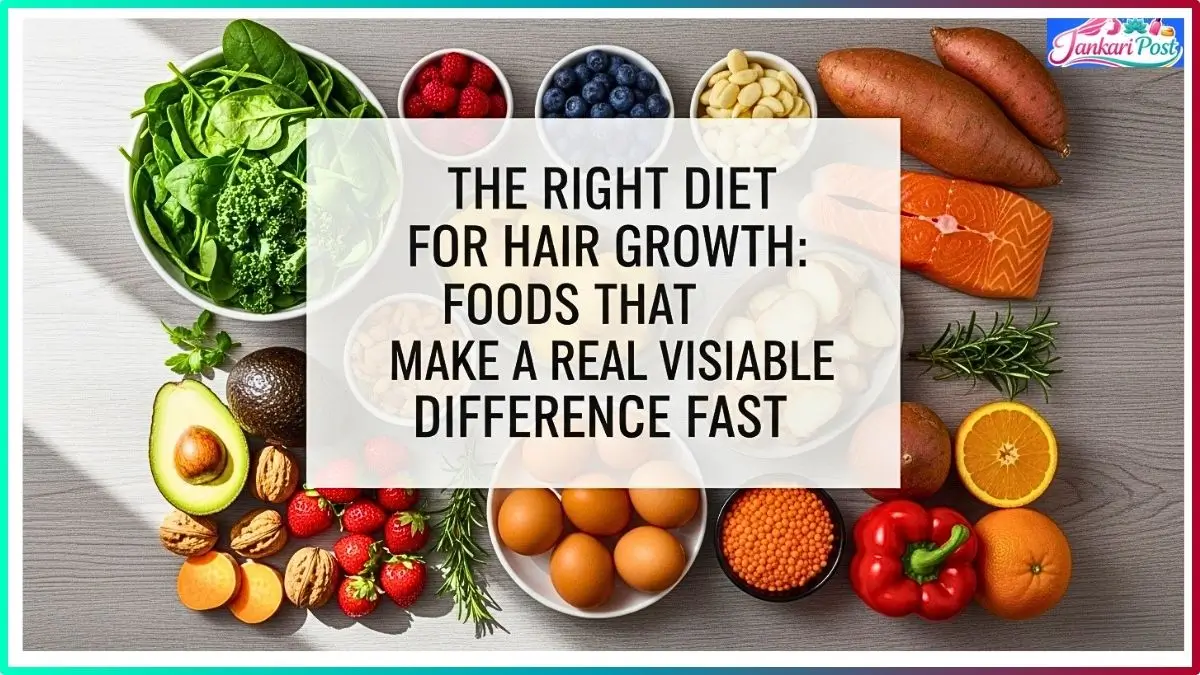
Many people try to fix hair thinning and hair fall using external products like serums, oils, and treatments, but often overlook one critical factor — nutrition. Hair health is deeply connected to what you eat, and without the right nutrients, even the best products may fail to deliver lasting results.
When your diet lacks essential vitamins, proteins, and minerals, your hair follicles do not receive the support they need to grow strong and healthy strands. This can lead to slow growth, excessive shedding, and visibly weaker hair over time.
Also Read

In this guide, you will learn how to build a practical and balanced diet for hair growth. From key nutrients to daily food choices, these simple steps can help improve hair strength, thickness, and overall health with consistent effort.
Overview Table
| Protein, as hair is made of keratin, which is a protein structure | Details |
|---|---|
| Most critical nutrient for hair | Protein, as hair is made of keratin which is a protein structure |
| Second most critical nutrient | Iron, which carries oxygen to hair follicles and supports growth cycles |
| Third most critical nutrient | Biotin and B vitamins, which strengthen hair and reduce shedding |
| Fourth most critical nutrient | Omega-3 fatty acids, which nourish the scalp and reduce inflammation |
| Fifth most critical nutrient | Zinc, which supports hair tissue repair and oil gland function |
| Average daily cost of hair-healthy meals | ₹150 to ₹250 per day depending on protein sources and seasonal produce |
| Time to see visible results | 21 to 30 days for reduced shedding, 60 to 90 days for noticeable growth |
| Minimum water intake needed | 2 to 3 liters per day to keep follicles hydrated and scalp circulation healthy |
| Foods to avoid completely | Protein, as hair is made of keratin, which is a protein structure |
Main Problem
Hair growth is controlled by what happens inside your body, not what you put on your scalp. Most people treat hair fall and slow growth as a hair problem and attack it with external products. They buy expensive treatments, get salon procedures done, and follow complicated routines. Some of it helps temporarily, but the shedding comes back, the hair stays thin, and nothing changes long-term.

The real issue is nutritional deficiency. Hair follicles are living structures that need a constant supply of protein, vitamins, minerals, and healthy fats to produce strong hair strands. When your diet lacks even one critical nutrient, hair growth slows down, existing hair becomes weak and breaks easily, and shedding increases. Your body prioritizes vital organs over hair, so when nutrients are scarce, hair gets the last share.
Why it happens
Most Indian diets are heavy in carbohydrates like rice, roti, and bread but low in protein, iron, and healthy fats. Breakfast is often tea and biscuits, lunch is dal-rice or roti-sabzi with very little protein, and dinner is similar. Protein sources like eggs, chicken, fish, paneer, or legumes appear once a day at best, and often in very small quantities.
I realized this in mid-2026 when a nutritionist asked me to track everything I ate for seven days. I was shocked to see I was eating less than 30 grams of protein daily when my body needed at least 50 grams. I was also skipping meals, drinking only one glass of water before noon, and living on sugary snacks between meals. My hair did not stand a chance.
How I fixed it
I added one boiled egg to my breakfast every single morning. I replaced my evening chai and biscuits with a handful of soaked almonds and walnuts. I started eating a palm-sized portion of paneer, chicken, or fish with lunch and dinner. I also began drinking three liters of water daily and took a multivitamin that covered iron, biotin, and zinc. Within three weeks, the hair fall reduced so dramatically that I could see the difference in my bathroom drain.
Step-by-Step Guide
This is the exact eating routine I follow every day to support healthy hair growth. Each step includes real foods, costs, and portion sizes.
Step 1: Add Protein to Breakfast Every Morning

Hair is made of keratin, which is a protein. Without enough protein in your diet, your body cannot build strong hair strands. I eat two boiled eggs every morning, which cost around ₹10 to ₹12 and provide about 12 grams of protein. Boil them the night before and store them in the fridge so breakfast takes less than five minutes.
If you do not eat eggs, have a bowl of Greek yogurt or a glass of milk with a scoop of peanut butter. The goal is to get at least 15 grams of protein before 10 AM. This single change made my hair visibly thicker and stronger within one month.
Step 2: Eat Iron-Rich Foods with Lunch Daily
Iron deficiency is one of the most common causes of hair loss, especially in women. I add half a bowl of boiled spinach or a small serving of chicken liver to my lunch every day. Spinach costs around ₹20 for a bunch that lasts two days, and chicken liver costs about ₹80 for 250 grams.
Pair iron-rich foods with vitamin C sources like lemon juice, tomatoes, or a small orange to help your body absorb the iron better. Never drink tea or coffee immediately after a meal because they block iron absorption. Wait at least one hour.
Step 3: Include Omega-3 Fatty Acids in Dinner
Omega-3 fats reduce scalp inflammation, nourish hair follicles, and add shine to your hair. I eat fish like mackerel or sardines twice a week, which costs around ₹150 to ₹200 for 500 grams. On other days, I add one tablespoon of freshly ground flaxseeds to my dal or sabzi.
Flaxseeds cost ₹60 for 250 grams and last nearly a month. Grind them fresh every week and store them in an airtight container in the fridge. Whole flaxseeds pass through your body undigested and provide no benefit.
Step 4: Take a Multivitamin Supplement Daily

Even with a balanced diet, it is hard to get every nutrient your hair needs in the right amounts. I take HealthViva Multivitamin for Women, which costs ₹399 for 60 tablets and includes biotin, iron, zinc, and all B vitamins. One tablet daily after breakfast covers the nutritional gaps my food might miss.
This is especially helpful if you have a restrictive diet, do not eat meat, or have a history of anemia. I noticed less shedding and faster nail growth within two weeks of starting this supplement.
Step 5: Drink Three Liters of Water Throughout the Day
Dehydration makes your scalp dry, reduces blood circulation to hair follicles, and slows down hair growth. I keep a one-liter bottle on my desk and make sure I finish three bottles by the end of the day. The first liter goes down before lunch, the second by evening, and the third by bedtime.
Water costs nothing and makes a massive difference. My scalp used to be flaky and itchy, but it cleared up completely once I started drinking enough water. Set reminders on your phone if you forget to drink throughout the day.
Step 6: Snack on Nuts and Seeds Instead of Biscuits
Mid-morning and evening snacks are where most people ruin their nutrient intake. I replaced my tea-time biscuits with a small handful of almonds, walnuts, and pumpkin seeds. A 200-gram mixed nut pack costs around ₹250 and lasts about two weeks.
Soak the almonds overnight to make them easier to digest. Walnuts provide omega-3 fats, pumpkin seeds provide zinc, and almonds provide vitamin E. All three nutrients directly support hair health. This snack keeps you full, stabilizes blood sugar, and feeds your hair follicles at the same time.
Step 7: Avoid Refined Sugar and Fried Foods Completely
Sugar spikes insulin levels, which can trigger hair shedding. Fried foods clog your system, create inflammation, and block nutrient absorption. I cut out packaged sweets, sodas, chips, and fried snacks entirely. This was the hardest change, but also the most effective.
If you crave something sweet, eat a piece of fruit or a small square of dark chocolate. Your hair will respond to this change faster than any topical treatment you have ever tried.
Common Mistakes
Eating the Same Meals Every Single Day
Your body needs variety to get a full spectrum of nutrients. Eating only dal-rice or roti-sabzi every single day limits the vitamins and minerals your hair receives. Rotate your protein sources between eggs, chicken, fish, paneer, and legumes. Change your vegetables every few days. This ensures your hair gets everything it needs.
Drinking Too Much Tea or Coffee Throughout the Day
Excessive caffeine dehydrates your body, blocks iron absorption, and can trigger hair shedding. I used to drink five to six cups of chai daily. Cutting it down to two cups in the morning and switching to herbal teas or plain water the rest of the day reduced my shedding noticeably within two weeks.
Skipping Meals to Lose Weight Fast
Crash dieting and fasting for long hours starve your hair follicles. When your body goes into survival mode, it shuts down hair growth to conserve energy. I learned this the hard way when my hair thinned dramatically during my extreme calorie restriction phase. Eat balanced meals every four to five hours to keep your metabolism and hair growth steady.
Relying Only on Supplements Without Changing Your Diet

Supplements support your diet; they do not replace it. Taking biotin tablets while surviving on junk food will not give you healthy hair. Whole foods provide nutrients in forms your body absorbs and uses better than isolated supplements. Fix your meals first, then add supplements to fill specific gaps.
Not Tracking Your Protein Intake at All
Most people have no idea how much protein they eat daily. Download a simple food-tracking app and log everything you eat for one week. You will quickly see where you are falling short. Hair needs consistent protein every single day to grow strong and healthy.
Real Results I Got
Day 7: Shedding in the shower reduced noticeably, with about half the amount of hair collecting near the drain compared to before starting this routine.
Day 14: My nails grew faster and stronger, which told me my body was getting enough biotin and protein to support keratin production everywhere.
Day 21: New baby hairs appeared along my hairline and parting, tiny but visible, which I had not seen in over a year.
Day 30: My hair felt thicker when I tied it into a ponytail, and the hair tie had to wrap around one fewer time than it did at the start of the month.
Results vary based on individual factors, including diet, stress, climate, and consistency.
Frequently Asked Questions
How long does it take to see hair growth from diet changes?
Reduced shedding appears within 14 to 21 days. Visible new growth takes 60 to 90 days because hair grows slowly and needs consistent nutrition over time.Can vegetarians grow healthy hair without eating eggs or meat?
Yes, by eating paneer, Greek yogurt, lentils, chickpeas, quinoa, nuts, seeds, and taking a B12 supplement to cover nutrients found mainly in animal products.Does drinking more water actually help hair growth?
Yes, hydration keeps your scalp healthy, supports blood circulation to hair follicles, and helps your body absorb and transport nutrients effectively to every cell including hair roots.Which is more important for hair, protein or vitamins?
Protein is the building block of hair, so it is the most critical. But vitamins like biotin, iron, and zinc support the processes that use protein to build hair.Can diet alone fix severe hair loss?
If hair loss is caused by nutritional deficiency, diet can fix it completely. If caused by medical conditions, hormones, or genetics, consult a dermatologist for proper diagnosis and treatment.My Final Words
Fixing your hair from the inside with the right diet for hair growth is the most effective long-term solution you will ever find. No serum, oil, or treatment can replace the nutrients your hair follicles need to function properly. Once you start feeding your body the protein, iron, healthy fats, and vitamins it needs, your hair responds faster than you expect.
Pick three changes from this guide to start this weekend — add eggs to your breakfast, swap your evening snack for nuts, and commit to drinking three liters of water daily. Track your shedding for the next 14 days and watch the difference.
Disclaimer
If you try any new supplement or food and experience an allergic reaction, stomach upset, or unusual symptoms, stop immediately and consult a doctor. For severe or sudden hair loss, persistent scalp issues, or hair loss accompanied by other health symptoms, consult a dermatologist or trichologist to rule out underlying medical conditions like thyroid disorders, anemia, or hormonal imbalances. The dietary suggestions in this article are based on personal experience and general nutritional knowledge, not medical advice. Results vary depending on individual health, existing deficiencies, and consistency.

Dr. Jushya Bhatia Sarin is a qualified dermatologist with M.B.B.S., M.D. (Dermatology, Venereology & Leprosy), and MRCP (SCE), UK. She is the founder member of Sarin Skin Clinic in Defence Colony, New Delhi, specializing in skin, hair, and nail health. Her work focuses on providing personalized skincare solutions and making reliable skin care knowledge accessible to everyone.
