 Skip to content
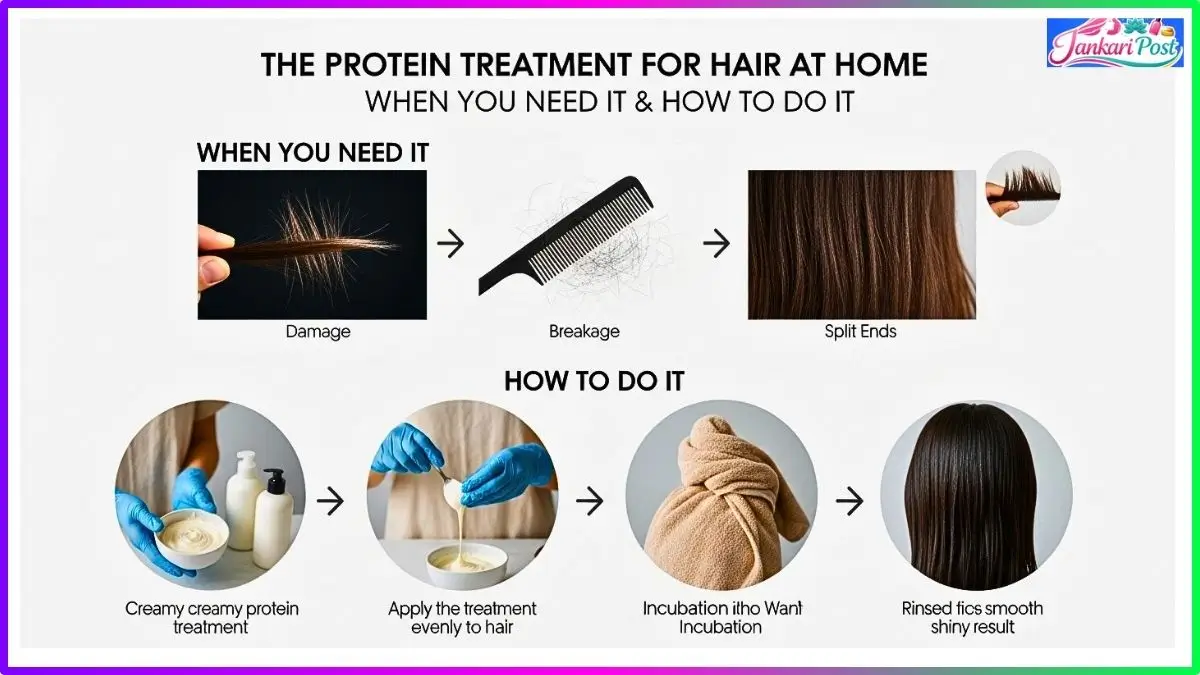
Hair that breaks at the slightest touch, feels rough like straw, and refuses to hold any style is more common than most people admit. Whether it is caused by frequent coloring, heat styling, or chemical treatments, damaged hair does not just look unhealthy — it actually loses its internal strength and structure over time. And no matter how many moisturizing products you try, the problem often keeps getting worse.
The mistake many people make is focusing only on hydration while completely ignoring protein loss, which is the real foundation of strong, resilient hair. Without enough protein, your strands become weak, stretchy, and prone to snapping, even during simple daily activities like combing or tying your hair.
Also Read

In this guide, you will learn exactly when your hair needs a protein treatment, how to do it correctly at home, and what realistic improvements you can expect within the first 30 days. No hype, no confusion — just a clear, practical routine that actually helps rebuild damaged hair from the inside out.
Overview Table
| 20 to 45 minutes, es depending on product type | Details |
|---|---|
| Primary purpose | Rebuilds broken hair structure and strengthens weak strands |
| Best for | Chemically treated, heat-damaged, or overly moisturized hair |
| Frequency | Once every 2 to 3 weeks for damaged hair, once a month for healthy hair |
| Treatment time | 20 to 45 minutes depending on product type |
| Average cost of products | ₹400 to ₹1200 for a full treatment routine |
| Patch test required | Yes, especially if you have scalp sensitivity or allergies |
| Can be overdone | Yes, too much protein causes dryness and brittleness |
| Visible results timeline | 14 to 21 days with consistent use |
| Must follow with | Deep conditioning treatment to restore moisture balance |
Main Problem
Hair damage is not always about dryness. Most people assume their rough, frizzy, breaking hair needs more moisture, more oil, or richer conditioners. They pile on leave-in creams, hair oils, and hydrating masks week after week. The hair might feel softer temporarily, but the breakage does not stop. In fact, it often gets worse.
The real issue is structural damage. Every strand of your hair is made up of a protein called keratin. When you color your hair, use heat tools, get chemical treatments like smoothing or perms, or even expose your hair to harsh sun and pollution, the protein bonds inside each strand break down. Once those bonds weaken, no amount of moisture can repair the actual structure. The hair becomes weak, stretchy when wet, loses its natural bounce, and snaps easily.
Why does it happen?
Protein loss happens faster than most people realize. Hair color, especially bleach, breaks down the keratin structure to allow pigment to enter the hair shaft. Heat styling tools weaken the protein bonds every single time you use them, even with a heat protectant spray.

Chemical straightening and perms deliberately alter the protein structure to change the hair’s natural shape. Even over-washing with harsh sulfate shampoos strips the outer protective layer and exposes the inner protein structure to damage.
I learned this the hard way in early 2026 when my hairdresser told me my hair was over-moisturized. I did not even know that was possible. She explained that my hair had become mushy, limp, and weak because I kept adding hydration without giving it any structural support. Protein was the missing piece, and once I started using it correctly, everything changed.
How I fixed it
I stopped using deep conditioning masks every week and replaced one session per month with a targeted protein treatment for hair. I also started watching how my hair behaved when it was wet. If it stretched too much and felt gummy, that was a clear sign it needed protein. If it felt dry and snapped quickly, it needed moisture instead. Learning to read my hair’s signals made all the difference. Within three weeks, the excessive shedding reduced noticeably, and my hair started holding styles again without falling flat within an hour.
Step-by-Step Guide
This is the exact routine I follow at home. Each step matters, and the order is critical for the treatment to work properly.
Step 1: Use a Clarifying Shampoo
Before applying any protein treatment, your hair needs to be completely clean and free of product buildup. I use Neutrogena Anti-Residue Shampoo, which costs around ₹450 for a 175ml bottle and lasts about two months when used once every two weeks. This shampoo removes silicones, oils, and styling product residue that can block the protein from penetrating the hair shaft.
Wet your hair thoroughly with warm water. Take a coin-sized amount of the clarifying shampoo and massage it into your scalp and through the length of your hair for two minutes. Rinse completely. Do not condition at this stage. Your hair should feel squeaky clean, almost stripped. That is exactly what you want before a protein treatment. Gently squeeze out excess water with a towel, but do not rub or twist your hair.
Step 2: Apply the Protein Treatment
I use Schwarzkopf Professional Bonacure Fibre Force Fortifying Primer, which costs ₹1150 for a 200ml bottle. One bottle lasts me about four treatments. This product contains hydrolyzed keratin, which is a form of protein broken down into small molecules that can actually enter the hair shaft and repair damage from the inside.
Section your damp hair into four parts. Apply the treatment generously from mid-length to the ends, avoiding the scalp. Use a wide-tooth comb to distribute it evenly through every strand. Clip your hair up and leave the treatment on for 20 minutes. If your hair is severely damaged, you can leave it on for up to 30 minutes, but never longer. Always do a patch test on a small section of hair first to see how your hair responds. Over-processing with protein can make hair stiff and brittle.
Rinse the treatment out thoroughly with cool water. Your hair will feel slightly firmer even at this stage.
Step 3: Follow with a Deep Conditioner

Protein treatments can be drying on their own, so you must follow with a moisturizing conditioner to restore softness and balance. I use L’Oreal Paris Total Repair 5 Masque, which costs ₹325 for a 196ml jar. Apply it generously to the lengths and ends, leave it on for five minutes, then rinse with cool water.
This step is not optional. Skipping it will leave your hair feeling rough, tangled, and difficult to manage. The combination of protein followed by moisture gives you the best of both — strength and softness.
Step 4: Apply a Lightweight Scalp Serum After Washing
Once your hair is towel-dried, apply a scalp serum to support hair health from the roots. I use The Derma Co 2% Redensyl Hair Growth Serum, which costs ₹599 for a 100ml bottle. This serum contains peptides and nutrients that support the scalp environment and reduce breakage at the root level.
Part your hair into sections and apply three to four drops directly to the scalp. Massage gently with your fingertips for two minutes. Do not rinse. This serum is lightweight and absorbs quickly without leaving any greasy residue. Use it twice a week after washing your hair, not on the same day as the protein treatment unless your scalp feels comfortable with it.
Step 5: Take a Biotin Supplement Daily
Hair strength is not only about what you apply externally. I started taking HealthKart Biotin 10,000 mcg tablets, which cost ₹349 for a bottle of 60 tablets. One tablet per day after breakfast has made a noticeable difference in reducing hair fall and improving overall hair texture over time.
Biotin supports keratin production inside your body, which means your new hair growth comes in stronger and healthier. This is a long-term habit, not a quick fix. I noticed a difference after about six weeks of consistent use.
Step 6: Reduce Heat Styling to Once a Week

This was the hardest change for me, but also the most effective. I used to blow-dry and straighten my hair three to four times a week. Now I limit heat styling to once a week and always use a heat protectant spray before any tool touches my hair.
On non-heat days, I let my hair air-dry and use a microfiber towel to reduce frizz. This single habit change gave my hair the recovery time it desperately needed. Protein treatments work much better when you stop actively damaging your hair at the same time.
Common Mistakes
Using Protein Treatments Too Often
Protein is powerful, but overdoing it causes a problem called protein overload. Your hair becomes stiff, dry, brittle, and starts breaking even more than before. If your hair feels crunchy or straw-like after a treatment, you used too much or left it on too long. Stick to once every two to three weeks for damaged hair and once a month for healthy hair.
Skipping the Moisture Step After Protein
Some people think protein alone will fix everything and skip the conditioning step to save time. This leaves hair unbalanced. Protein strengthens the structure, but moisture keeps it flexible. You need both. Always follow your protein treatment with a deep conditioner, no exceptions.
Applying Protein Treatment to the Scalp
Protein treatments are meant for the hair strands, not the scalp. Applying them to your scalp can clog hair follicles, cause itching, and lead to buildup that makes your scalp feel heavy and uncomfortable. Always apply from mid-length to ends only, keeping at least two inches away from the roots.
Expecting Instant Transformation in One Session
One protein treatment will not reverse months or years of damage. It takes consistent use over four to six weeks to see real, lasting improvement. Hair grows slowly and repairs even more slowly. Patience and consistency matter more than the product you choose.
Using Protein on Already Healthy Hair

If your hair is not damaged, you do not need regular protein treatments. Healthy hair has a natural balance of protein and moisture. Adding more protein when it is not needed will throw off that balance and create new problems. Only use protein treatments if you have heat damage, chemical damage, or signs of breakage and weakness.
Real Results I Got
Day 7: My hair felt noticeably thicker and held a curl for the first time in months without drooping within an hour.
Day 14: Shedding in the shower reduced by about half compared to what I saw before starting the treatment.
Day 21: The frizz around my hairline smoothed out completely, and my hair started looking shinier even without any styling products.
Day 30: Breakage when combing wet hair almost stopped entirely, and I could see tiny new baby hairs growing along my parting line.
Results vary based on individual factors, including diet, stress, climate, and consistency.
Frequently Asked Questions
How do I know if my hair needs protein or moisture?
Wet a strand and gently stretch it. If it stretches too much and feels gummy, you need protein. If it snaps quickly, you need moisture instead.Can I use protein treatment on colored hair?
Yes, colored hair often needs protein because the coloring process breaks down keratin bonds. Use it two weeks after coloring to avoid overprocessing your hair.How long should I leave a protein treatment on?
Most treatments work best between 20 and 30 minutes. Leaving it on longer does not improve results and can make your hair stiff and brittle instead.Can I do a protein treatment every week?
No, once every two to three weeks is enough for damaged hair. Weekly use leads to protein overload, which makes hair dry, hard, and prone to breakage.Is homemade protein treatment as effective as store-bought?
Homemade treatments like egg masks contain protein but are harder to rinse and less penetrating. Store-bought treatments use hydrolyzed protein that absorbs better and works faster.My Final Words
Learning when and how to use a protein treatment for hair correctly changed the entire health of my hair. It is not about using it all the time or expecting magic overnight. It is about reading your hair’s needs, using the right products in the right order, and balancing protein with moisture every single time. If your hair is breaking, feels weak, or refuses to hold any style, a protein treatment might be exactly what it has been missing.
Disclaimer
Always do a patch test before using any new hair treatment, especially if you have sensitive skin or a history of allergic reactions. If you experience burning, itching, or unusual hair loss, stop use immediately and consult a dermatologist for proper evaluation. The suggestions in this article are based on personal experience and are not a substitute for professional medical or trichological advice. Results vary depending on hair type, damage level, and consistency of use.

Dr. Jushya Bhatia Sarin is a qualified dermatologist with M.B.B.S., M.D. (Dermatology, Venereology & Leprosy), and MRCP (SCE), UK. She is the founder member of Sarin Skin Clinic in Defence Colony, New Delhi, specializing in skin, hair, and nail health. Her work focuses on providing personalized skincare solutions and making reliable skin care knowledge accessible to everyone.
