 Skip to content
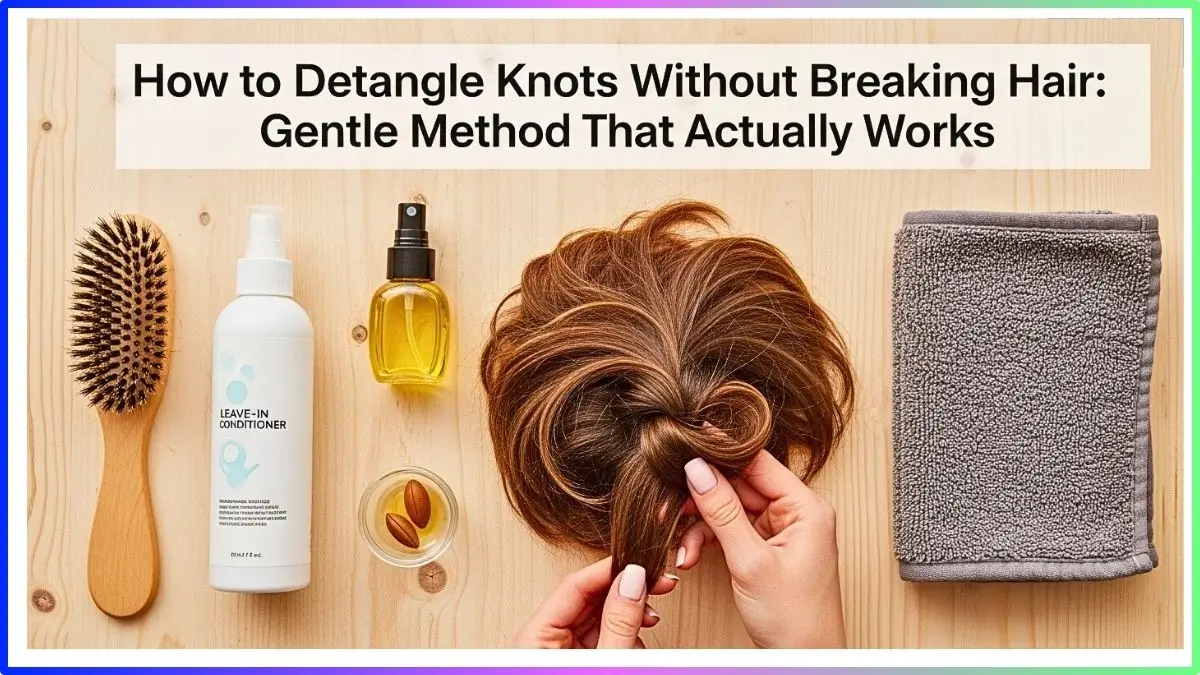
I have watched people drag a comb through knotted wet hair from roots to ends with enough force to hear individual strands snapping, and almost everyone does it in a rush without connecting that single habit to the short, broken flyaways that keep appearing along their crown and parting within weeks.
My own worst mistake was leaving my hair in a tight top bun for two or three days at a stretch, then ripping through the matted tangles with a cheap plastic comb in under two minutes — and I repeated this for over a year before understanding why my mid-lengths always looked thin and rough despite no actual hair fall.
Also Read


By the end of this guide, you will know the exact method, tools, and products I used to detangle even dense knots without breaking hair — with real product names, costs in Rupees, and a 30-day routine that reduced my breakage and flyaways visibly.
Quick Overview
| Two to three times per week, maximum | Details |
|---|---|
| Best Detangling Comb | Neem Wood Wide-Tooth Comb — ₹180 to ₹250 |
| Best Pre-Wash Oil | Plum Onion and Bhringraj Hair Oil — ₹375 for 100ml |
| Best Shampoo for Tangled Hair | Biotique Bio Kelp Protein Shampoo — ₹199 for 190ml |
| Best Conditioner for Slip | L’Oréal Paris Extraordinary Oil Conditioner — ₹249 for 192ml |
| Best Leave-In Serum | Livon Serum for Women — ₹155 for 100ml |
| When to Detangle | While conditioner is on or when hair is 80 percent dry |
| Correct Combing Direction | Tips upward toward roots, never roots downward |
| Monthly Routine Cost | ₹400 to ₹800 approximately |
| Wash Frequency | Two to three times per week maximum |
| Biggest Mistake to Avoid | Two to three times per week, maximum |
Why Rough Detangling Causes So Much Hair Damage?
Every person with tangly hair knows the morning frustration. Knots build up overnight, after washing, during humid commutes, and especially when hair stays tied in the same position for hours. The natural response is to grab whatever comb sits closest and pull through until resistance gives way. That moment of resistance,ce followed by a snap, is a breaking of hair right at its weakest structural point.
The short, rough pieces lining your parting and crown are not always fresh baby hairs growing in. Most of the time, they are broken mid-shaft fragments left behind by forceful detangling sessions from weeks and months past.
Why does your hair knot up so frequently?

Tangling happens when individual strands wrap around each other and lock together. The outer cuticle layer of every strand has tiny overlapping scales — when hair is dry, damaged, or rough in texture, those scales lift and catch on neighboring strands the way two pieces of Velcro grip onto each other.
Hard water in most Indian cities compounds this considerably. Mineral deposits from calcium and magnesium coat the hair shaft, creating a surface that tangles far more easily than smooth, highly conditioned hair. Sleeping with hair loose on a cotton pillowcase, skipping conditioner after shampooing, and using plastic combs with sharp seam lines along the teeth all push knot formation from occasional to daily.
My tangling increased dramatically after moving to a city with harder water. Knots that previously took seconds to separate started requiring minutes of pulling, and the breakage showed up within weeks as a cloud of short flyaways across my crown.
How I Changed My Entire Detangling Approach
I stopped treating detangling as a 90-second task to rush through before leaving the house. Instead, I moved the process inside my show, er, where the conditioner gave each strand enough slip to separate without force.
Switching from a plastic comb to a wide-tooth neem wood comb and training myself to work from tips upward changed my results within the first week. Within 10 days, the short broken strands I normally found on my shoulders and clothes reduced visibly, and my comb collected far fewer snapped pieces after each session.
How to Detangle Knots Without Breaking Hair
These are the exact steps I follow on every wash day. Each one targets a specific cause of detangling damage, and the order matters because each step prepares the hair for the next one.
Step 1: Apply Pre-Wash Oil to Loosen Tight Knots

Before touching a comb, I apply Plum Onion and Bhringraj Hair Oil — ₹375 for 100ml — to my lengths and the spots where knots concentrate most. Oil softens the cuticle and lubricates each strand so they slide apart with dramatically less friction during combing.
Take five to six drops, warm between your palms, and focus on mid-lengths and ends. Work the oil through knotted sections using only your fingers for about three minutes. Leave it on for 20 to 30 minutes before shampooing.
Do not leave oil on beyond 45 minutes — extended oiling attracts dust and risks clogging follicles. Perform a patch test on the inside of your wrist 24 hours before using any new oil for the first time.
Step 2: Shampoo Your Scalp Without Creating New Tangles
I wash with Biotique Bio Kelp Protein Shampoo — ₹199 for 190ml — applied to the scalp only. The worst habit during shampooing is piling all your lengths on top of your head and scrubbing them together. That creates entirely new knots while you are trying to get clean.
Apply a coin-sized amount to your wet scalp and massage with fingertips in circular motions for 60 seconds. Let the lather flow downward through the lengths naturally during rinsing. Use lukewarm water — hot water lifts the cuticle further and makes strands rougher and more tangle-prone once dry.
Wash two to three times per week at most. Overwashing strips the natural oils that give hair the internal slip it needs to stay separated between sessions.
Step 3: Detangle with conditioner, still coating each strand, and
This single step removed more breakage from my routine than any product purchase ever managed. I apply L’Oréal Paris Extraordinary Oil Conditioner — ₹249 for 192ml — generously from mid-length to tips while still standing in the shower. The conditioner wraps each strand in a slippery layer that lets knots release with minimal pulling.
After applying, use your fingers first to separate the largest, most obvious knots. Then take a neem wood wide-tooth comb — ₹180 to ₹250 at local Ayurvedic stores — and start from the very tips of your hair. Work upward in small two-inch sections. When the comb meets a knot, stop immediately, hold the section above the tangle with your free hand, and work through that spot with short, gentle strokes.
Leave conditioner on for two to three minutes total, then finish with a cool water rinse. Cool water helps seal the cuticle flat, keeping strands smoother and far less likely to re-tangle during drying.
Step 4Se al With a Lightweight Serum After Washing.

Within 60 seconds of leaving the shower, I wrap my hair in a microfiber towel — ₹250 to ₹350 online — for 8 to 10 minutes. Once the wrap comes off, I apply Livon Serum for Women — ₹155 for 100ml — to damp lengths and ends right away.
Two pumps for shoulder-length hair. Rub between palms and smooth through the lengths using a downward pressing motion. This serum coats the cuticle surface and reduces the strand-on-strand friction that causes retangling as hair dries.
Do not apply oil or any heavy product after the serum. Oil seals the hair shaft and blocks serum absorption, canceling out the anti-tangle benefit and leaving a greasy finish.
Step 5 Night Routine That Prevents Knots From Building Overnight
Loose hair rubbing against a cotton pillowcase for seven to eight hours creates friction tangles that compact into dense mats by morning. Switching to a satin pillowcase — ₹300 to ₹450 on most Indian e-commerce platforms — or tying a loose braid with a satin scrunchie at ₹120 to ₹200 for a three-pack solved my overnight tangling almost entirely.
Every evening before bed, I spend 90 seconds doing a gentle tips-to-roots pass with my wide-tooth comb. This clears small daily tangles before they compact into the stubborn knots that need force and cause breakage the next morning.
In 2026, this nightly micro-detangling habit has become one of the most practical hair care changes I recommend to anyone who asks about preventing breakage.
Common Mistakes That Make Hair Breakage Worse
Each mistake below covers a new problem not discussed anywhere in the five steps above.
Detangling Bone Dry Hair With No Product Applied
Dry hair has maximum friction between every strand. Pulling a comb through a dry tangle forces cuticle scales to catch, lift, and tear against each other. Before attempting to detangle dry hair between washes, mist the knotted section with water from a spray bottle or apply one drop of serum directly to the tangle. That small addition of slip reduces the force needed dramatically and prevents the cuticle damage that causes rough texture over time.
Using Brushes With Densely Packed Bristles on Knotted Hair
Fine-tooth combs and paddle brushes with tightly spaced bristle rows grip more strands per pass than a wide-tooth comb does. Each pull distributes tension across dozens of strands simultaneously, multiplying breakage per stroke. A wide-tooth comb isolates smaller sections and reduces the pulling forceidual strand absorbs.
Combing From Roots Down to Ends Through Tangles

This is the most widespread detangling error and the most destructive one. Starting from the roots pushes every small tangle further down the shaft and compresses them into one large mat at the ends. That compressed knot requires far more force to undo — snapping several strands in the process. Starting from the tips, the comb progressively clears tangles so that it passes through cleanly by the time it reaches the upper lengths.
Rushing Through Resistant Knots to Save Two Minutes
Impatience breaks more hair than the wrong product ever will. Yanking through a resistant knot to save 30 seconds creates damage that takes months of fresh growth to replace. Those lost seconds show up as visible flyaways within three to four weeks. Allocating five dedicated minutes for gentle detangling on wash days protects months of length and keeps ends looking fuller.
Real Results I Got
Day 7 — Then the number of short snapped strands collected in my comb after each detangling session dropped to roughly half of what I used to see before starting this routine.
Day 14 — my hair stayed noticeably less tangled between wash days, and overnight knots reduced to mild tangles that my fingers could separate in the morning without needing a comb at all.
Day 21 — the frizzy halo of short broken flyaways along my parting and crown appeared visibly thinner compared to the density I noticed during the first week.
Day 30 — a cousin who braids my hair during family visits commented that my ends felt fuller and smoother, and the full-length detangling before braiding took nearly half the time it used to require.
Results vary based on individual factors, including diet, stress, climate, and consistency.
Frequently Asked Questions
Is it better to detangle wet hair or dry hair?
Detangle with conditioner in the shower or when hair reaches 80 percent dryness. Never comb through fully wet, uncoated hair — it stretches and snaps.Which comb causes the least breakage during detangling?
A neem wood wide-tooth comb with smooth, rounded teeth works best. Avoid plastic combs with visible seam lines that catch and snag individual strands.How often should I detangle my hair in a week?
Detangle thoroughly on every wash day and do a quick 90-second tips-to-roots pass each evening before bed to prevent knot buildup overnight.Can leave-in serum actually prevent retangling?
In my experience, applying serum to damp hair right after washing kept strands smoother and reduced tangling noticeably through the next 48 hours consistently.Should I cut out knots that will not come undone?
If a knot refuses to release after oiling and careful finger work, trimming that small section prevents further damage from spreading to the surrounding healthy strands.My Final Words
Breaking hair during detangling is one of those everyday damages people accept as completely unavoidable. It is not. The snapping sounds you hear and the short flyaways that keep multiplying along your parting are almost always caused by wrong combing direction, wrong tools, and wrong timing — all of which you can fix starting this week.
Disclaimer
This article is based entirely on personal experience and general awareness. It does not constitute medical advice and should not replace professional guidance. Do a patch test on the inside of your wrist before using any new oil, serum, or leave-in product for the first time. Consult a certified dermatologist or trichologist if you experience persistent scalp irritation, excessive shedding, sudden bald patches, or any unusual symptoms that do not improve with basic routine changes. Individual results depend on hair type, porosity, existing damage level, water quality, diet, and consistency of routine.

Dr. Jushya Bhatia Sarin is a qualified dermatologist with M.B.B.S., M.D. (Dermatology, Venereology & Leprosy), and MRCP (SCE), UK. She is the founder member of Sarin Skin Clinic in Defence Colony, New Delhi, specializing in skin, hair, and nail health. Her work focuses on providing personalized skincare solutions and making reliable skin care knowledge accessible to everyone.
